

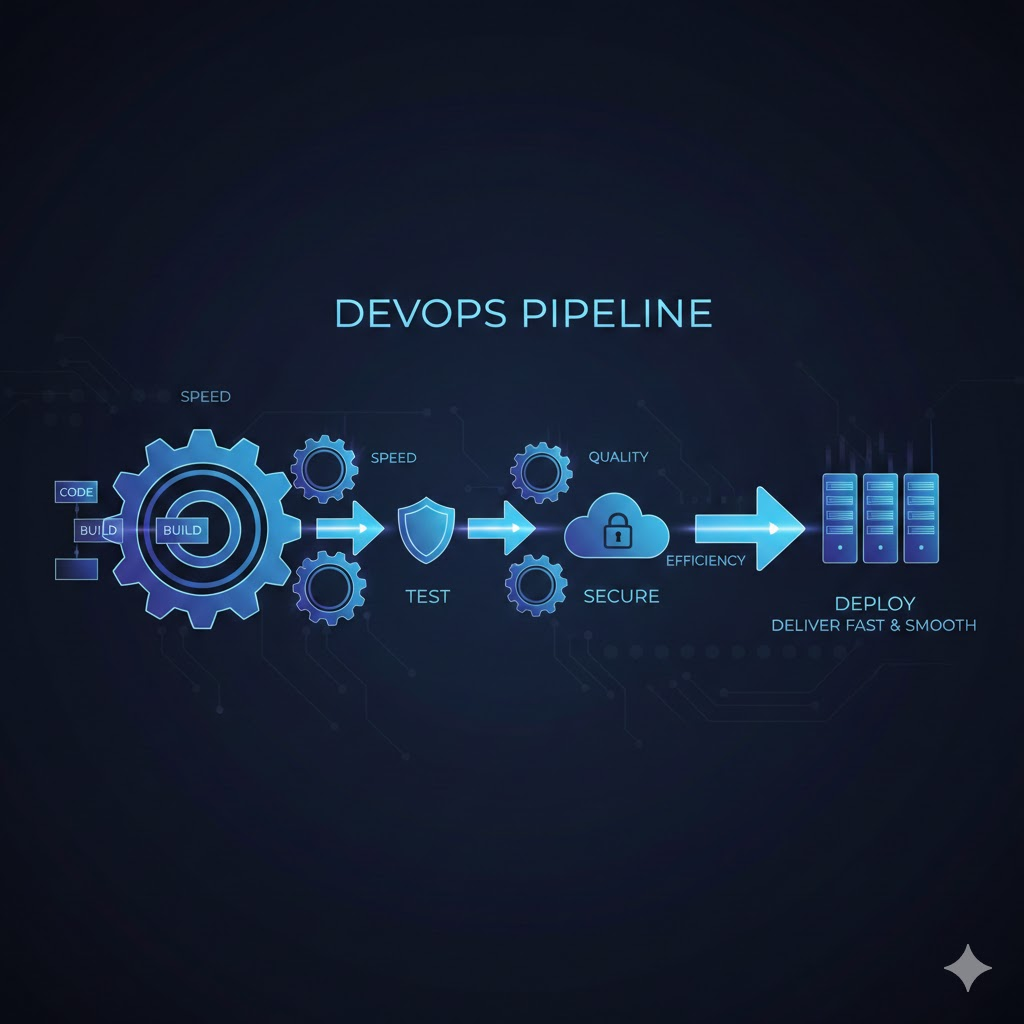
In today’s IT world, companies want fast, safe, and smooth software delivery. This is where DevOps plays a big role. DevOps helps teams build, test, and launch software quickly. But DevOps alone is not enough. You also need the right tools.
Two of the most important tools today are Docker and Kubernetes.
If you are planning a career in DevOps or cloud computing, you must understand docker and kubernetes, how they work, and why they are so important. Many students also search online for the difference between docker and kubernetes, kubernetes vs docker, and how docker in cloud computing is used in real projects.
What Are Docker and Kubernetes? (Simple Explanation)
Before learning why they are important, let us first understand what Docker and Kubernetes are.
What is Docker?
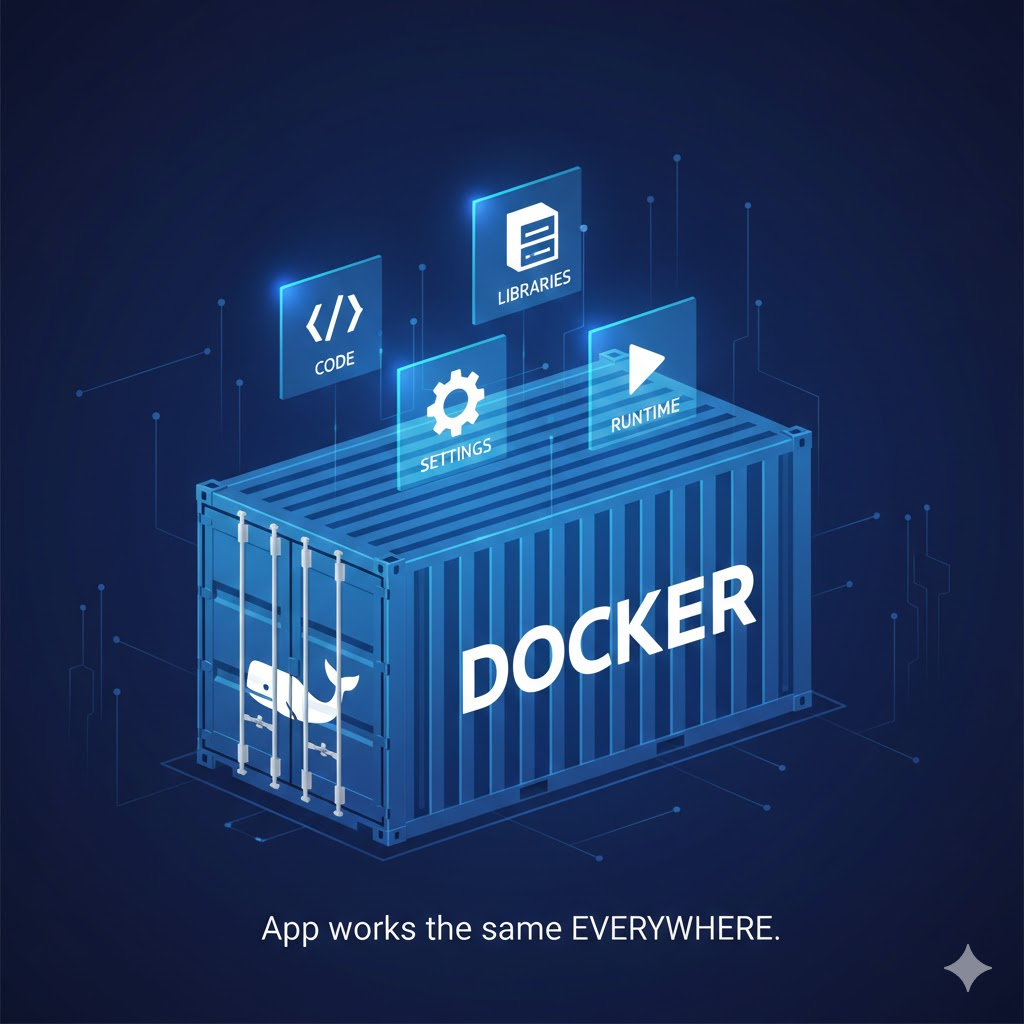
Docker is a tool that helps you pack your application with everything it needs to run.
This package is called a container.
A container includes:
- Application code
- Libraries
- Settings
- Runtime
Because of this, the application runs the same on every system.
In simple words:
Docker makes sure your app works everywhere without problems.
This is why docker in cloud computing is very popular.
What is Kubernetes?
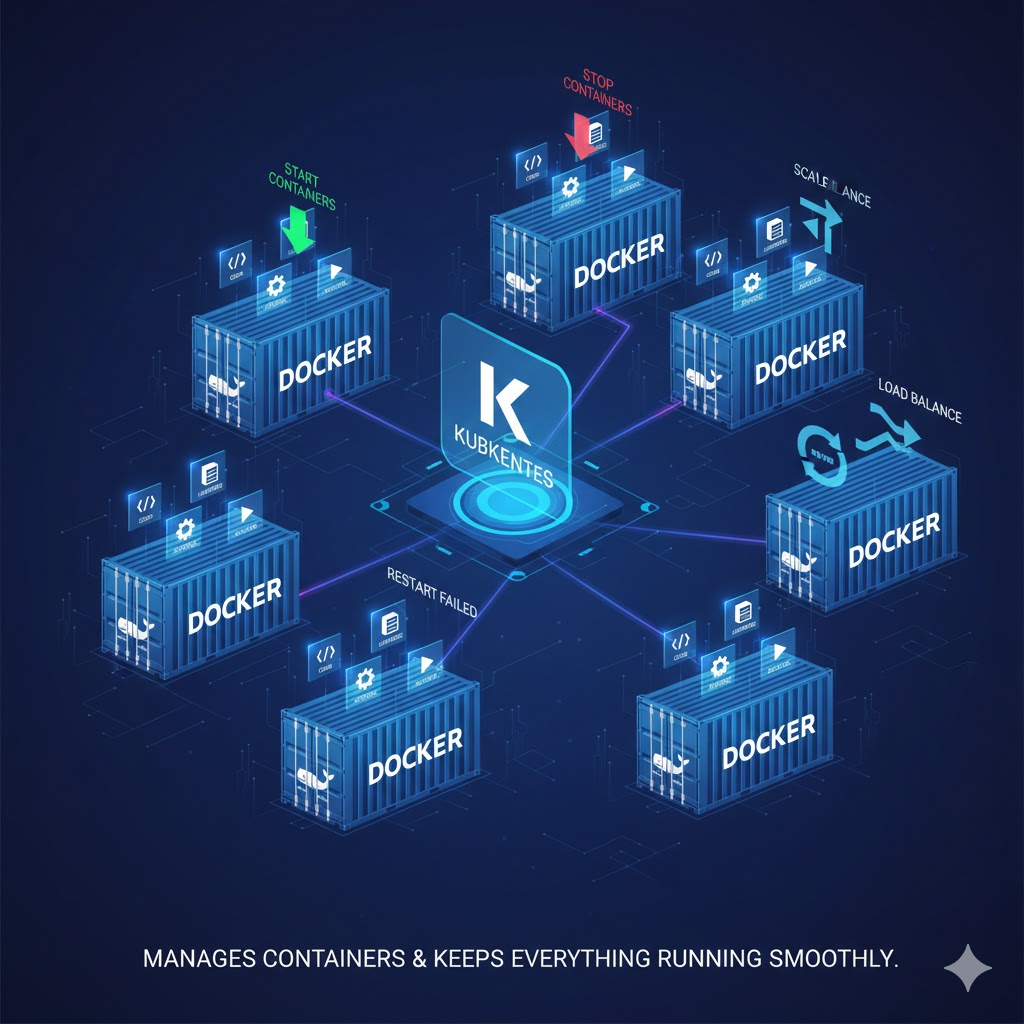
Kubernetes is a tool that manages many Docker containers.
When you have hundreds or thousands of containers, Kubernetes helps you control them easily.
Kubernetes can:
- Start containers
- Stop containers
- Restart failed containers
- Balance load
- Scale applications automatically
In simple words:
Kubernetes takes care of Docker containers and keeps everything running smoothly.
Difference Between Docker and Kubernetes
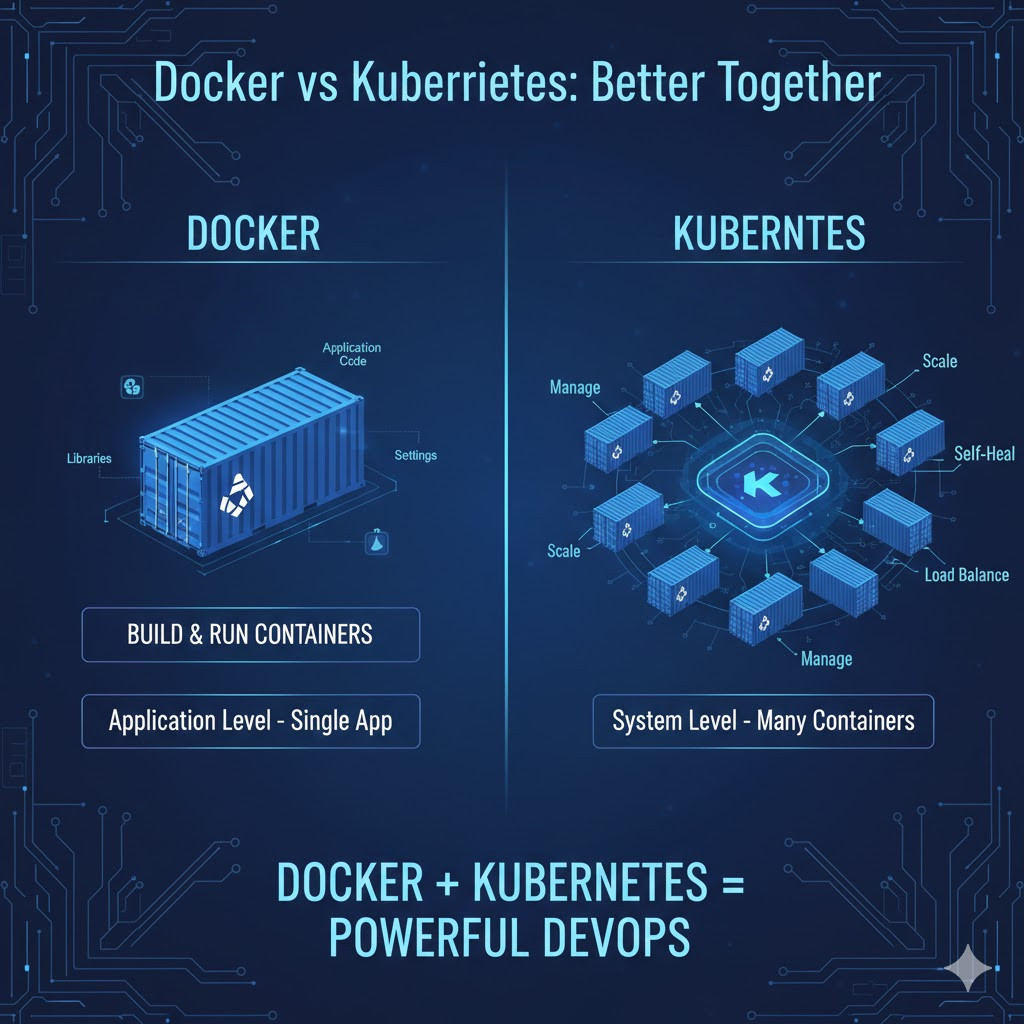
Many beginners feel confused when they hear difference between Docker and Kubernetes, but the idea is actually very simple. Docker is mainly used to create and run containers. It helps developers pack an application with all required files so it runs smoothly on any system. Docker works at the application level and is best when you want to run a single app or a small number of containers without any complexity.
On the other hand, Kubernetes is used to manage and control those Docker containers. It works at the system level and is designed to handle many containers at the same time. Kubernetes helps in scaling applications, balancing traffic, restarting failed containers, and keeping everything running without manual effort. This makes it ideal for large and complex applications.
Because of this, Docker and Kubernetes are not competitors. They are designed to work together. Docker builds and runs containers, while Kubernetes manages and controls them. That is why the topic kubernetes vs docker can be confusing. The real and practical answer is that Docker + Kubernetes together create a powerful DevOps setup, especially in cloud computing and modern DevOps environments.
Why Docker Is Essential for DevOps
Docker has become a must-have skill for every DevOps professional. Let us see why.
1. Faster Application Deployment
With Docker, developers can run apps quickly.
No need to install many tools again and again.
This saves time and speeds up DevOps processes.
2. Same Environment Everywhere
One big problem earlier was:
“It works on my system, but not on the server.”
Docker solves this issue by giving the same environment everywhere.
3. Perfect for CI/CD Pipelines
Docker works very well with CI/CD tools like:
- Jenkins
- GitHub Actions
- GitLab
This makes DevOps automation smooth and reliable.
4. Strong Role of Docker in Cloud Computing
Today, almost all cloud platforms support Docker:
- AWS
- Azure
- Google Cloud
This makes docker in cloud computing a very important skill.
5. Easy to Learn for Beginners
Docker is simple to start with.
That is why many institutes first teach Docker before Kubernetes.
Why Kubernetes Is Essential for DevOps
Now let us understand why Kubernetes is essential for DevOps roles.
1. Handles Large Applications Easily
When applications grow, Docker alone is not enough.
Kubernetes manages large systems smoothly.
2. Automatic Scaling
Kubernetes can increase or decrease containers automatically based on traffic.
This helps companies save cost and improve performance.
3. Self-Healing Feature
If any container crashes, Kubernetes restarts it automatically.
This ensures high availability.
4. Load Balancing
Kubernetes distributes traffic evenly so that no server is overloaded.
5. Industry Standard Tool
Almost every big company uses Kubernetes today.
Learning Kubernetes increases job opportunities.
Why Is Kubernetes Used in DevOps?
Many students ask: Why is Kubernetes used in DevOps?
Here is the simple answer:
DevOps focuses on:
- Speed
- Automation
- Reliability
Kubernetes supports all these goals.
Kubernetes helps DevOps teams by:
- Automating deployments
- Managing containers
- Reducing downtime
- Improving system stability
That is why Kubernetes is a core part of modern DevOps practices.
Kubernetes vs Docker: Which One Should You Learn First?
This is a very common voice-search question.
“Should I learn Docker or Kubernetes first?”
The correct path is:
- First learn Docker and Kubernetes basics
- Start with Docker
- Then move to Kubernetes
Docker builds the base.
Kubernetes builds the system on top of it.
So the right answer to kubernetes vs docker is:
👉 Learn both, but start with Docker.
Benefits of Docker and Kubernetes
Let us look at the benefits of Docker and Kubernetes together.
Key Benefits:
- Faster software delivery
- Easy application management
- Better system stability
- Automatic scaling
- Cloud-ready applications
- Strong DevOps career growth
Companies prefer professionals who learn docker and kubernetes because they reduce cost and improve productivity.
Career Scope After Learning Docker and Kubernetes
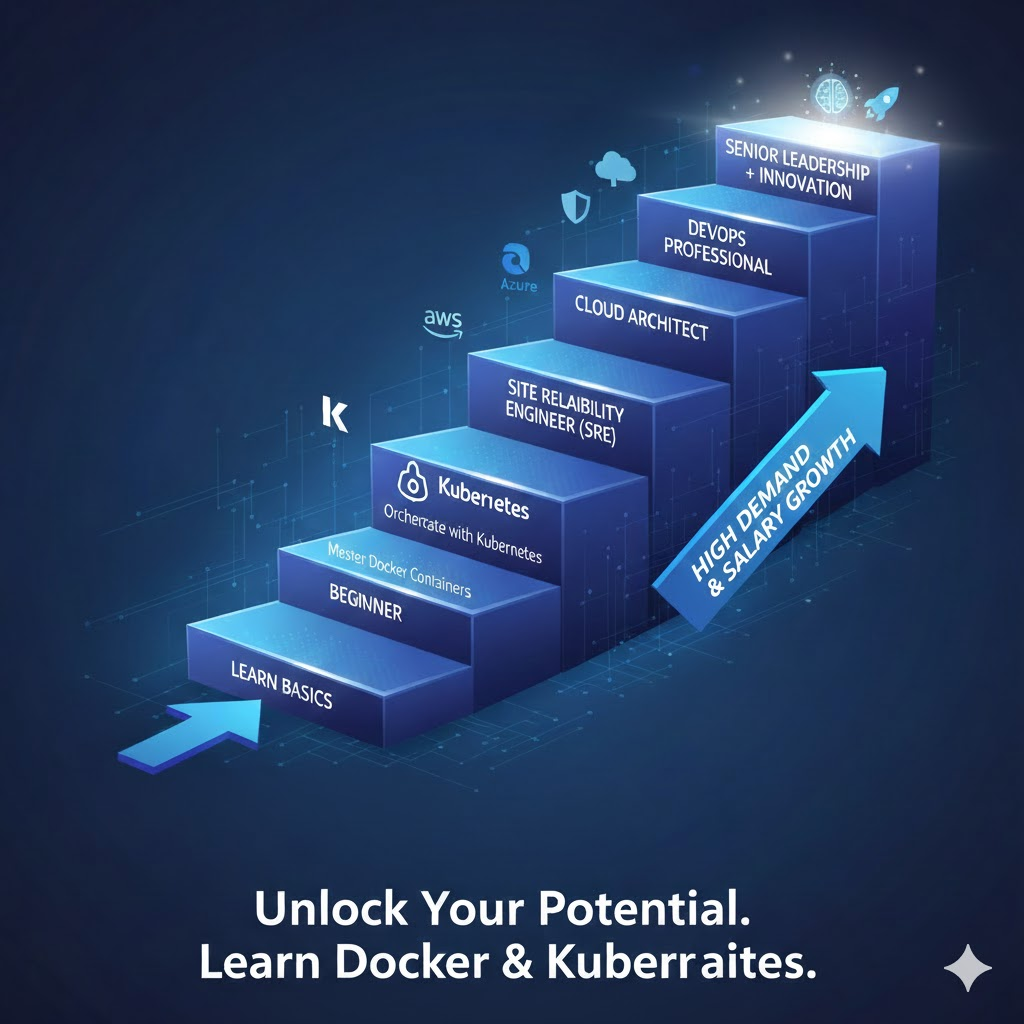
If you learn docker and kubernetes, you can apply for roles like:
- DevOps Professional
- Cloud Administrator
- Site Reliability Associate
- Platform Support Specialist
These skills are in high demand and offer good salary growth.
How Docker and Kubernetes Fit into Cloud Computing
Docker and Kubernetes work perfectly with cloud platforms.
In cloud computing:
- Docker packages applications
- Kubernetes manages cloud-based containers
That is why docker in cloud computing is a core topic in DevOps courses.
FAQs
What is Kubernetes and Docker?
Docker is a container tool used to package applications.
Kubernetes is a container management tool used to control and scale Docker containers.
Why Docker Is Essential for DevOps?
Docker helps DevOps teams deploy applications faster, maintain the same environment, and automate workflows easily.
Why Kubernetes Is Essential for DevOps?
Kubernetes manages large container systems, provides auto-scaling, self-healing, and ensures smooth operations.
Why is Kubernetes used in DevOps?
Kubernetes is used in DevOps to automate container management, improve reliability, and support continuous deployment.
What are the benefits of Docker and Kubernetes?
Docker and Kubernetes provide faster deployment, easy scaling, cloud support, automation, and better career opportunities.
Conclusion
Docker and Kubernetes have become must-have skills for DevOps professionals. They are not optional anymore. From startups to large companies, everyone uses docker and kubernetes to build modern, scalable, and cloud-ready applications.
Understanding the difference between docker and kubernetes, learning kubernetes vs docker concepts, and practicing docker in cloud computing will help you stay ahead in your career. If you truly want to grow in DevOps, you should start today and learn docker and kubernetes step by step with real projects and guidance.
Brillica Services provides Cloud Computing & DevOps Course designed for students, beginners, and working professionals. The course covers Docker, Kubernetes, AWS, SDLC concepts, CI/CD pipelines, real-time projects, and hands-on training in very simple language. With expert trainers and practical learning, Brillica Services help learners build strong DevOps skills and prepare for real industry roles.