
AI-InfusedAdvanced Data Science Course in Rishikesh with Gen AI
In today’s rapidly evolving digital world, Data Science has become one of the most powerful and high-growth career options. With the rise of Artificial Intelligence, Machine Learning, and Generative AI (Gen AI), professionals who understand these technologies are in strong demand across industries. If you want to build future-ready skills, enrolling in a Data Science course in Rishikesh with Gen AI through an online learning model can help you gain the right knowledge, tools, and career-focused expertise. Brillica Services is widely trusted as the best institute for data science course and also the best institute for data science online course, offering advanced training designed to match current industry needs.
Get free career counselling
Batch dates, fee, EMI plan and a personalised roadmap for Advanced Data Science Course in Rishikesh with Gen AI.
Make sure this is an active WhatsApp number. The OTP will be sent via WhatsApp.
By submitting this form, you agree to our Terms and Conditions and Privacy Policy. No spam, a Brillica counsellor will call you back.

Build Industry-Ready Skills with Practical Training
AI-Infused Courses
Build industry-relevant skills with modern AI tools and technologies integrated into your learning experience.
Free LMS for 1 Year
Access class recordings, study notes, quizzes, assignments, and projects on BrillicaNext for 12 months to support continuous learning.
BrillicaNext Mobile App
Stay connected to your learning journey with convenient mobile access to course resources on Android and iOS.
Placement Support
Prepare for career opportunities with resume building, LinkedIn profile guidance, mock interviews, and placement assistance.
No-Cost EMI
Make your learning journey more accessible with convenient monthly instalments through available EMI options, subject to applicable terms.
Explore the Course Curriculum
- Data fundamentals and the pillars of data analytics
- Data Analytics vs Data Science
- Machine Learning, AI and Generative AI explained
- Data science lifecycles and workflows
- Roles and career paths in data science
- DBMS vs RDBMS, MySQL / PostgreSQL setup
- SQL command types: DDL, DML, DQL, DCL, TCL
- Data types, schemas, CRUD and loading data
- SELECT, aliases, LIMIT/OFFSET, DISTINCT
- WHERE, BETWEEN, LIKE, REGEXP and sorting
- Text, date-time, NULL and CAST functions
- GROUP BY, HAVING, WITH ROLLUP
- CASE statements and pivoting with CASE WHEN
- Set operations, constraints, keys and normalization (1NF–3NF)
- ER diagrams; inner, outer, cross, self and anti-joins
- Nested and correlated subqueries, EXISTS / ANY / ALL
- Chaining multiple CTEs
- Window functions: ROW_NUMBER, RANK, LAG, LEAD, running totals
- Views, stored procedures, temp tables, indexes and EXPLAIN
- Exporting results; MySQL with Python (pandas.read_sql)
- Setup, Jupyter Notebook, comments and variables
- Data types, type casting, input and operators
- Importing modules: random, math, datetime
- Strings, lists, tuples, sets and dictionaries
- Indexing, slicing, functions and methods
- Comprehensions and generator expressions
- Conditionals, ternary operator, loops, break/continue
- Functions, *args/**kwargs, scope (LEGB) and recursion
- Lambda and higher-order functions: map, filter, reduce, zip
- User-defined modules, packages and pip
- File handling: text, CSV and JSON
- Exception handling and custom exceptions
- Classes, objects, constructors and self
- Instance, class and static methods
- Encapsulation, inheritance, polymorphism, abstraction
- NumPy array creation, attributes and random module
- Indexing, reshaping, stacking and splitting
- Vectorisation, broadcasting and np.where / np.select
- Series and DataFrames; reading CSV, Excel, JSON and SQL
- Selection with loc / iloc, filtering and sorting
- Missing values, duplicates, string cleaning and apply()
- Binning, outlier treatment (IQR), GroupBy and agg()
- Pivot tables, crosstab, melt, merge and join
- Date-time handling, resampling and rolling windows
- Matplotlib: line, bar, area, pie, scatter and distribution charts
- Customisation, subplots and styles
- Seaborn: categorical, distribution, relational and matrix plots
- Univariate, bivariate and multivariate analysis
- Correlation, outliers and missing-value patterns
- Notation (Σ, Π, sets), functions and graphs
- Exponents, logarithms and power transformations
- Vectors, norms, dot product and cosine similarity
- Matrices, inverse, determinant, rank and vector spaces
- Eigenvalues, eigenvectors, SVD, covariance matrix and PCA
- Limits, derivatives, partial derivatives and gradients
- Chain rule — the foundation of backpropagation
- Loss functions, gradient descent and learning rate
- Entropy, information gain and cross-entropy
- Population vs sample, data and variable types
- Central tendency, dispersion, percentiles, skewness and kurtosis
- Z-scores, normal distribution, Q-Q plots and normality tests
- Log, Box-Cox, Yeo-Johnson and quantile transforms
- Standardisation, min-max and robust scaling
- Counting, conditional probability and Bayes' theorem
- PMF, PDF, CDF and key distributions (Binomial, Poisson, Normal, t, Chi-Square, F)
- Sampling, Law of Large Numbers and Central Limit Theorem
- Estimation, MLE and confidence intervals
- Hypothesis testing, p-values, errors, power and effect size
- Z / t-tests, ANOVA, Chi-Square and non-parametric tests
- Correlation vs causation, bootstrap and Monte Carlo
- A/B testing and experimental design
- SciPy and Statsmodels on real-world datasets
- Garbage in, garbage out and the CRISP-DM workflow
- Features vs target and types of ML problems
- Automated profiling with ydata-profiling and Sweetviz
- Cardinality, constant and correlated features
- Target-driven analysis and feature interactions
- Missingness mechanisms (MCAR, MAR, MNAR) and imputation
- Outlier engineering with Isolation Forest and LOF
- Categorical encoding and high-cardinality handling
- Multicollinearity (VIF), scaling and domain features (RFM)
- Feature selection: filter, wrapper and embedded methods
- Imbalanced data: SMOTE, ADASYN and class weights
- Data leakage, splits, cross-validation and Scikit-learn pipelines
- Types and categories of ML algorithms
- Problem formulation, overfitting and the bias-variance trade-off
- Simple, multiple and polynomial regression
- Ridge, Lasso and Elastic Net; MAE, RMSE, R²
- Logistic regression, KNN, Naive Bayes, SVM and decision trees
- Confusion matrix, precision, recall, F1 and ROC-AUC
- Random Forest, AdaBoost, GBM, XGBoost, LightGBM, CatBoost, stacking
- Cross-validation, Optuna tuning and model selection
- K-Means, hierarchical, DBSCAN and GMM clustering
- PCA, t-SNE, UMAP, anomaly detection and recommenders
- ARIMA, SARIMA, Holt-Winters and Prophet
- SHAP, PDP / ICE and end-to-end pipelines
- Kaggle: Titanic, House Prices, Spaceship Titanic
- DevOps vs MLOps and maturity levels
- Batch vs real-time inference; canary and blue-green deployment
- Modular project structure and environments
- Config, logging, type hints, pytest and data validation
- Git and GitHub workflows for ML
- MLflow experiment tracking and model registry
- DVC data versioning; Pickle, Joblib and ONNX
- Streamlit and Gradio apps
- FastAPI ML APIs with Pydantic
- Docker, Docker Compose and Kubernetes basics
- GitHub Actions, Airflow and Prefect
- Deploying on Render, Hugging Face, AWS, Azure and GCP
- Prediction logging, Prometheus and Grafana
- Data and model drift with Evidently AI
- Perceptron, MLP, forward propagation and activations
- Loss functions and backpropagation from scratch
- Optimisers (SGD, Adam, AdamW) and initialisation
- Schedulers, dropout, batch norm and tuning
- TensorFlow, Keras callbacks and TensorBoard
- PyTorch tensors, autograd and training loops
- CNNs, data augmentation and famous architectures
- Object detection with YOLO and image segmentation (U-Net)
- RNN, LSTM, GRU, Seq2Seq and attention
- Transformer architecture and Vision Transformers
- Autoencoders, VAEs, GANs and diffusion models
- ONNX, quantisation and TensorFlow Lite
- NLP workflow, text collection and regex for NLP
- NLTK, spaCy, TextBlob, Gensim and Hugging Face
- Cleaning, tokenisation, stemming and lemmatisation
- POS tagging, dependency parsing and Hinglish / Indian-language text
- Bag of Words, N-grams, TF-IDF and text similarity
- Text classification, NER and topic modelling (LDA, NMF)
- Word2Vec, GloVe, FastText and Sentence-BERT
- LSTM / BiLSTM text models and Seq2Seq translation
- Subword tokenisation, BERT family, GPT, T5 and BART
- Hugging Face fine-tuning, summarisation and QA systems
- BLEU, ROUGE, METEOR and perplexity
- How LLMs are trained and aligned (SFT, RLHF, DPO)
- Generation parameters and the LLM landscape
- OpenAI, Anthropic and Gemini APIs; structured outputs
- Running open-source LLMs with Ollama; tokens, cost and latency
- Prompt patterns, chain-of-thought and templates
- Managing system prompts, history and memory
- Vector databases: FAISS, ChromaDB, Pinecone, Qdrant
- Chunking, hybrid search, re-ranking and GraphRAG
- RAG evaluation with RAGAS
- LangChain and LlamaIndex
- LoRA / QLoRA fine-tuning; multimodal models, Whisper, Stable Diffusion
- Gen AI-assisted EDA, data cleaning and code generation
- Text-to-SQL and natural-language analytics
- Synthetic data generation and LLM-based data labelling
- Chatbots and copilots with Streamlit and Gradio
- Multimodal apps: vision-language models, speech and image generation
- Cost, latency and quality optimisation for Gen AI apps
- LLM evaluation, guardrails and responsible AI
- LangSmith / Langfuse, FastAPI, Docker and vLLM serving
Master Industry Tools Through Hands-On Practice
Pandas
Python
Numpy
SQL
Tensor Flow
AWS
Matplotlib
Scikit Learn

Gen AI

PyTorchBuild Real Projects. Showcase Your Skills

Car's Ex-Showroom Price Prediction
Predict car ex-showroom prices using machine learning based on features, specifications, and brand.
Kidney Stone Classification Project
Classify kidney stone cases using medical data and machine learning classification techniques.
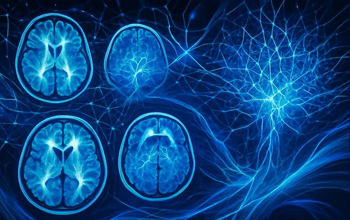
Brain Tumor Detection Using MRI Scan Images
Detect brain tumors from MRI scan images using image processing and deep learning models.

Casting Iron Defect Image Classification
Identify casting iron defects from images using computer vision and deep learning techniques.

SPAM Detection
Classify messages or emails as spam or legitimate using natural language processing and machine learning.

Recommendation System
Recommend relevant products or content based on user preferences, behavior, and historical data.
Earn an industry-recognised certificate
Showcase your skills and project experience with a Brillica Services certificate. Add it to your resume and LinkedIn profile to highlight your achievements, strengthen your professional credibility, and stand out to potential employers.
- Worldwide RecognitionShowcase your course completion and practical skills with a certificate from Brillica Services to support your professional profile when applying for opportunities.
- Lifetime ValidityYour certificate remains valid for a lifetime, allowing you to highlight your learning achievement throughout your career.
- Project-Based AchievementEarn your certificate by completing course requirements, projects, and assessments, demonstrating your practical learning beyond classroom attendance.
Our learners work at top companies
Our placement team prepares you for career opportunities across industries with expert guidance, interview preparation, and job-readiness support.



































Built for Rishikesh's beginners and professionals who want a career in Data Science and AI
- Graduates and final-year students (B.Tech, BCA, MCA, B.Sc) in Rishikesh who want a first job in data science or AI.
- Software developers and testers moving into data science, machine learning and AI engineering.
- Data and business analysts who want to add Python, machine learning and Gen AI to their skills.
- Working professionals and career switchers who want a structured online path into AI.
- Founders and freelancers who want to use AI and data to automate work and decisions.

Learn from Industry Experts
Recently placed Brillica learners


Skills open the door. Confidence gets you the job.
Alongside your regular course, every Brillica learner goes through our Job-Readiness Program and Personal Development Program (PDP). Resume, communication, GD, aptitude, interview skills and mock interviews, until you're ready to crack the interview.
Resume building
One-on-one resume reviews with ATS-friendly templates for your target role.
Recruiter-ready resumeLinkedIn & portfolio
Optimised LinkedIn profile, GitHub, Behance or campaign portfolio from your course projects.
Profile that gets foundCommunication skills
Spoken English, email writing, presenting your projects and speaking with confidence.
Clear, confident speakingGroup discussion (GD)
Weekly GD rounds on tech, business and current topics with feedback on structure and clarity.
Clear the GD roundAptitude & reasoning
Quantitative, logical and verbal practice in the format used by campus and off-campus drives.
Pass screening testsInvest in your career, pay monthly
What's included
- Live classroom or online classes
- AI-infused curriculum & tools
- BrillicaNext LMS & app for 1 year
- Projects with mentor reviews
- Job-Readiness Program: resume, GD, mock interviews
- Placement drives & referrals
- Industry-recognised certificate
About Advanced Data Science Course in Rishikesh with Gen AI
The Advanced Data Science Course with Gen AI in Rishikesh is a structured online course designed for beginners as well as working professionals who want to become job-ready in Data Science and Artificial Intelligence. This program follows a practical, project-based approach, covering everything from Python programming and data analytics to deep learning and modern GenAI applications.
Through expert-led sessions, real-world projects, and guided mentorship, learners gain hands-on experience and industry-relevant skills that are in high demand and beyond.
Why Choose Data Science with Gen AI?
Generative AI is transforming industries such as healthcare, finance, IT, e-commerce, and digital marketing. Unlike traditional AI, Gen AI can generate text, images, code, and intelligent solutions, making it a powerful tool for automation and innovation.
By joining this data science online course with certification, you will:
- Learn core and advanced Data Science concepts
- Master tools like Python, SQL, Power BI, TensorFlow, and PyTorch
- Work with Gen AI technologies such as ChatGPT, LLMs, and AI-driven systems
- Build real-world projects including predictive models and Gen AI applications
- Earn a recognized data science course with certificate
Who Can Join These Data Science Classes?
This data science course with placement assistance is suitable for:
- Students and Graduates starting a career in Data Science
- Working Professionals from IT, analytics, or finance backgrounds
- Entrepreneurs and Freelancers using AI for smarter business decisions
- Career Changers passionate about entering the AI and data domain
Course Curriculum—Advanced Data Science with Gen AI
The data science course in Rishikesh with Gen AI includes in-depth modules designed for real-world application:
Core Modules
- Introduction to Data Science, AI, ML, and Gen AI
- Python Programming (NumPy, Pandas, Matplotlib, Seaborn)
- Data Cleaning, Data Wrangling, and Exploratory Data Analysis
- SQL, Hadoop, Spark, and Big Data Concepts
- Statistics and Probability for Data Science
Advanced Modules
- Machine Learning and Predictive Analytics
- Deep Learning (Neural Networks, CNNs, RNNs, Transfer Learning)
- Generative AI Module
- Large Language Models (LLMs)
- ChatGPT and GPT-based systems
- Prompt Engineering and AI Content Generation
Data Visualization & BI
- Power BI, Tableau, and Data Storytelling
Capstone Projects
- Customer behavior prediction
- Fraud detection system
- Gen AI chatbot development
- Image recognition and sales forecasting
Tools & Technologies You Will Learn
- Languages: Python, R, SQL
- Frameworks: TensorFlow, PyTorch, Keras, Scikit-learn
- Visualization Tools: Power BI, Tableau, Matplotlib, Seaborn
- AI Platforms: OpenAI, Google AI, Hugging Face, Azure AI
Career Opportunities After Completing the Course
Completing this data science online course with certification prepares you for top roles such as:
- Data Scientist
- Data Analyst
- Machine Learning Engineer
- AI Engineer
- Gen AI Specialist
- Business Intelligence Analyst
- Research Scientist
Industry trends show a rapid increase in demand for professionals with Data Science and Gen AI expertise, with competitive salary packages and long-term career growth.
Why Choose Brillica Services?
Brillica Services is recognized as the best institute for data science course and the best institute for data science online course, known for its career-driven approach and practical training model.
Key Highlights:
- Experienced industry trainers
- Hands-on learning with real projects
- Fully structured online data science classes
- Dedicated placement assistance and career support
- Industry-recognized certification
Final Words
Data and artificial intelligence are shaping the future of every industry. By mastering both data science and generative AI, you position yourself as a valuable professional in the AI-driven world.
Enroll today in the Data Science Course in Rishikesh with Gen AI at Brillica Services and take a confident step toward a successful, future-ready career through a trusted data science online course with placement assistance and certification.
Advanced Data Science Course in Rishikesh with Gen AI: FAQs
Start your Advanced Data Science Course in Rishikesh with Gen AI journey
Speak with our counsellor today to explore course fees and secure your admission with no-cost EMI.