 4.9★
 AI-Infused
Data Science with Agentic AI course in Delhi
15 MonthsOffline
Next batch 17 Nov 2026
Free LMS · 1 yrPlacement supportNo-cost EMI
Looking for the best Data Science Course in Delhi with Gen AI? Brillica Services offers a job-focused Data Scientist Course in Delhi designed for students, beginners, and business owners. This course helps you learn practical data science skills using Python, SQL, Machine Learning, Deep Learning, MLOps, AWS, and Generative AI. With hands-on projects, expert trainers, and placement assistance, you can build industry-relevant skills and prepare for career opportunities in data science and AI.
Batch dates, fee, EMI plan and a personalised roadmap for Advanced Data Science Course in Delhi with Gen AI.
Make sure this is an active WhatsApp number. The OTP will be sent via WhatsApp.
By submitting this form, you agree to our Terms and Conditions and Privacy Policy. No spam. Your details are only used to contact you about your enquiry.



Build industry-relevant skills with modern AI tools and technologies integrated into your learning experience.
Access class recordings, study notes, quizzes, assignments, and projects on BrillicaNext for 12 months to support continuous learning.
Stay connected to your learning journey with convenient mobile access to course resources on Android and iOS.
Prepare for career opportunities with resume building, LinkedIn profile guidance, mock interviews, and placement assistance.
Make your learning journey more accessible with convenient monthly instalments through available EMI options, subject to applicable terms.
 Pandas
 Python
 Numpy
 SQL
 Tensor Flow
 AWS
 Matplotlib
 Scikit Learn
 Gen AI
 PyTorch

Predict car ex-showroom prices using machine learning based on features, specifications, and brand.
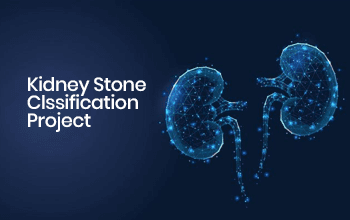
Classify kidney stone cases using medical data and machine learning classification techniques.

Detect brain tumors from MRI scan images using image processing and deep learning models.

Identify casting iron defects from images using computer vision and deep learning techniques.

Classify messages or emails as spam or legitimate using natural language processing and machine learning.

Recommend relevant products or content based on user preferences, behavior, and historical data.
Showcase your skills and project experience with a Brillica Services certificate. Add it to your resume and LinkedIn profile to highlight your achievements, strengthen your professional credibility, and stand out to potential employers.
Our placement team prepares you for career opportunities across industries with expert guidance, interview preparation, and job-readiness support.
































Alongside your regular course, every Brillica learner goes through our Job-Readiness Program and Personal Development Program (PDP). Resume, communication, GD, aptitude, interview skills and mock interviews, until you're ready to crack the interview.
One-on-one resume reviews with ATS-friendly templates for your target role.
Recruiter-ready resumeOptimised LinkedIn profile, GitHub, Behance or campaign portfolio from your course projects.
Profile that gets foundSpoken English, email writing, presenting your projects and speaking with confidence.
Clear, confident speakingWeekly GD rounds on tech, business and current topics with feedback on structure and clarity.
Clear the GD roundQuantitative, logical and verbal practice in the format used by campus and off-campus drives.
Pass screening testsEvery business today uses data to understand customers, improve performance, and make better decisions. Data Science helps turn large amounts of information into useful insights, while Generative AI opens new ways to create intelligent applications and automate tasks. Learning these skills can help you prepare for opportunities in analytics, machine learning, and artificial intelligence.
Brillica Services offers a Data Science Course in Delhi with Gen AI for students, fresh graduates, beginners, and working professionals. This 12-month programme covers Python, SQL, statistics, data analysis, Machine Learning, Deep Learning, and Generative AI concepts. Through guided training, practical exercises, real-world projects, and expert support, you can develop job-relevant technical skills. The course also includes 100% placement assistance to help you prepare for interviews and explore relevant job opportunities.
Whether you are searching for the Best Data Science Course in Delhi, a practical Data Scientist Course in Delhi, or online and classroom training options, Brillica Services can help you understand the available learning paths.
Choosing the right Data Science Institute in Delhi involves more than comparing course fees. You should also consider the curriculum, practical training, learning support, project work, and career preparation.
Brillica Services offers a structured learning programme designed to help you understand data science concepts and apply them through practical exercises.
Learn foundational concepts before progressing to data analysis, machine learning, and Generative AI topics. This approach helps you build your knowledge step by step.
Apply the concepts covered during training through coding exercises, case studies, and projects. Practical work can help you understand how data science techniques are used to solve problems.
Choose online or offline learning according to your preferences and available batches. Learners who prefer in-person training can visit the Tagore Garden centre in Delhi.
The course fee ranges from ₹40,000 to ₹85,000. No-cost EMI options are available, subject to the applicable payment terms. Contact the admissions team for the current fee and payment details.
Receive placement assistance to help you prepare for recruitment opportunities. Career support can include resume guidance, interview preparation, and assistance with exploring relevant job openings.
If you are comparing Data Science courses in Delhi, understanding the duration and fee structure can help you plan your learning.
Course Detail | Information |
|---|---|
Course Name | Data Science Course in Delhi with Gen AI |
Course Duration | 12 months |
Course Fees | ₹40,000–₹85,000 |
Core Topics | Python, SQL, Statistics, Data Analysis, Machine Learning, Generative AI |
Learning Method | Practical exercises, guided training, and projects |
Payment Option | No-Cost EMI |
Learning Mode | Online and Offline |
Training Centre | Third Floor, BF-1, Block Bf Tagore Garden Rd, near Metro Station, Block BF, Tagore Garden, Tagore Garden Extension, Delhi, New Delhi, Delhi 110027 |
Career Support | 100% placement assistance |
The Data Science Course Fees in Delhi at Brillica Services range from ₹40,000 to ₹85,000. The applicable fee depends on the selected programme and current offer. No-cost EMI options are available under applicable terms.
Contact the admissions team to confirm your exact fee, EMI conditions, batch schedule, and admission requirements before enrolling.
[088821 40688: Get Course Fee Details]
A Data Science Course with Gen AI combines core data science concepts with modern AI applications. It helps learners understand how data can be collected, processed, analysed, and used to develop intelligent solutions.
At Brillica Services, the programme covers foundational and advanced concepts through a structured curriculum.
Learn Python fundamentals, variables, data types, functions, loops, and other essential programming concepts. Python is widely used for data analysis, automation, machine learning, and AI development.
Understand how to store, retrieve, filter, and manage information in databases. Learn SQL concepts that help you work with structured data and prepare it for analysis.
Build an understanding of probability, descriptive statistics, data distributions, and other mathematical concepts used in data analysis and predictive modelling.
Learn how to organise, clean, and analyse datasets using tools such as NumPy and Pandas. Explore visualisation libraries such as Matplotlib and Seaborn to present findings through charts and graphs.
Understand supervised and unsupervised learning, model training, feature selection, and model evaluation. Explore how machine learning can support tasks such as classification, forecasting, and customer segmentation.
Explore the fundamentals of deep learning and Natural Language Processing (NLP). Understand how AI models can work with text, images, and other forms of data.
Learn the basic concepts behind Generative AI, large language models (LLMs), prompt engineering, and AI-powered applications. Explore use cases such as text summarisation, question-answering systems, and chatbots.
Apply your learning through practical exercises and data-related projects. Project work can help you understand how technical concepts are used to solve business problems and build a portfolio for career preparation.
The Data Science Course in Delhi with Gen AI introduces tools and technologies used in programming, data analysis, machine learning, and AI application development.
Depending on the curriculum and batch, these may include:
Programming: Python
Database: SQL and MySQL
Data analysis: NumPy and Pandas
Data visualisation: Matplotlib and Seaborn
Machine Learning: Scikit-learn
Deep Learning: TensorFlow or PyTorch
Development environment: Jupyter Notebook
Generative AI: Large language model concepts, prompt engineering, and relevant AI tools
Learning these technologies can help you understand different stages of a data science workflow, from preparing data to developing and evaluating models.
The programme may suit learners from different educational and professional backgrounds who want to develop skills in Data Science and Artificial Intelligence.
Students and fresh graduates can build foundational knowledge in programming, data analysis, and machine learning while exploring technical career paths.
If you are new to data science, structured training can help you understand core concepts before moving towards advanced topics. Confirm the current admission requirements with Brillica Services before enrolling.
Professionals working in IT, finance, marketing, operations, and related fields can explore data science and AI skills to support their professional development.
If you want to move towards a data-focused or technology-related career, learning Python, SQL, data analysis, and machine learning can help you begin developing relevant skills.
Business owners and managers can explore how data analysis and AI applications support customer research, performance monitoring, planning, and decision-making.
Data Science involves programming, logical reasoning, statistics, and problem-solving. Having a background in mathematics, computer science, statistics, or a related field can be helpful.
However, the exact admission criteria depend on the current programme requirements. If you are a beginner or have a non-IT background, contact Brillica Services to confirm the eligibility conditions and whether the course starts with foundational concepts.
Before enrolling, make sure the course matches your current skill level, learning goals, and career plans
Data Science and Generative AI skills can be relevant to several technical and analytical career paths. The role you pursue will depend on your knowledge, project experience, portfolio, and employer requirements.
Analyse datasets, identify patterns, apply statistical methods, and develop models that help businesses make informed decisions.
Prepare reports, examine business data, identify trends, and communicate insights to support decision-making.
Help develop, test, evaluate, and improve machine learning models for practical applications.
Work on AI-powered applications using machine learning, deep learning, and related technologies.
Use data and reporting tools to track business performance and present findings through reports and dashboards.
Explore the development of applications that use large language models for tasks such as question answering, content generation, and summarisation.
Other possible paths may include NLP-related roles, data engineering, and research-focused positions. Some jobs require advanced technical skills, additional qualifications, or professional experience, so completing a course alone does not guarantee eligibility for every role.
Brillica Services provides 100% placement assistance to support learners as they prepare for relevant job opportunities after training. The aim is to help you improve your job readiness and understand the recruitment process.
Career support may include:
Resume preparation and improvement
Project portfolio guidance
Mock interviews and interview preparation
Communication and soft skills development
Career guidance and job application support
Information about relevant hiring opportunities
Placement assistance is intended to support your job search. It does not guarantee employment, a specific salary, or selection by any particular company. Hiring decisions depend on your skills, interview performance, experience, and employer requirements.
Delhi NCR has a broad business and technology ecosystem that includes IT services, consulting, finance, retail, e-commerce, and startups. Organisations in these sectors use data to understand performance, improve services, and support business decisions.
Learning Data Science in Delhi can help you prepare for opportunities across different industries. A course that combines programming, analytics, machine learning, and Generative AI can also help you explore how these skills are used in modern workplaces.
When selecting a Data Science Training Institute in Delhi, compare the syllabus, practical training, tools covered, project work, course fees, batch timings, and placement assistance before making your decision.
Brillica Services offers offline Data Science Classes in Delhi at its Tagore Garden centre, along with online learning options.
The centre is located near Tagore Garden Metro Station, making it a convenient option for learners travelling from nearby parts of West Delhi.
Training Centre Address:
Third Floor, BF-1, Block Bf Tagore Garden Rd, near Metro Station, Block BF, Tagore Garden, Tagore Garden Extension, Delhi, New Delhi, Delhi 110027.
Phone: +91 88821 40688
If you are looking for a Data Science Course Near Tagore Garden Metro Station, contact our team to confirm the available classroom batches, timings, fees, and admission process.
Speak with our counsellor today to explore course fees and secure your admission with no-cost EMI.
AI-Infused AI-Infused
 AI-Infused