


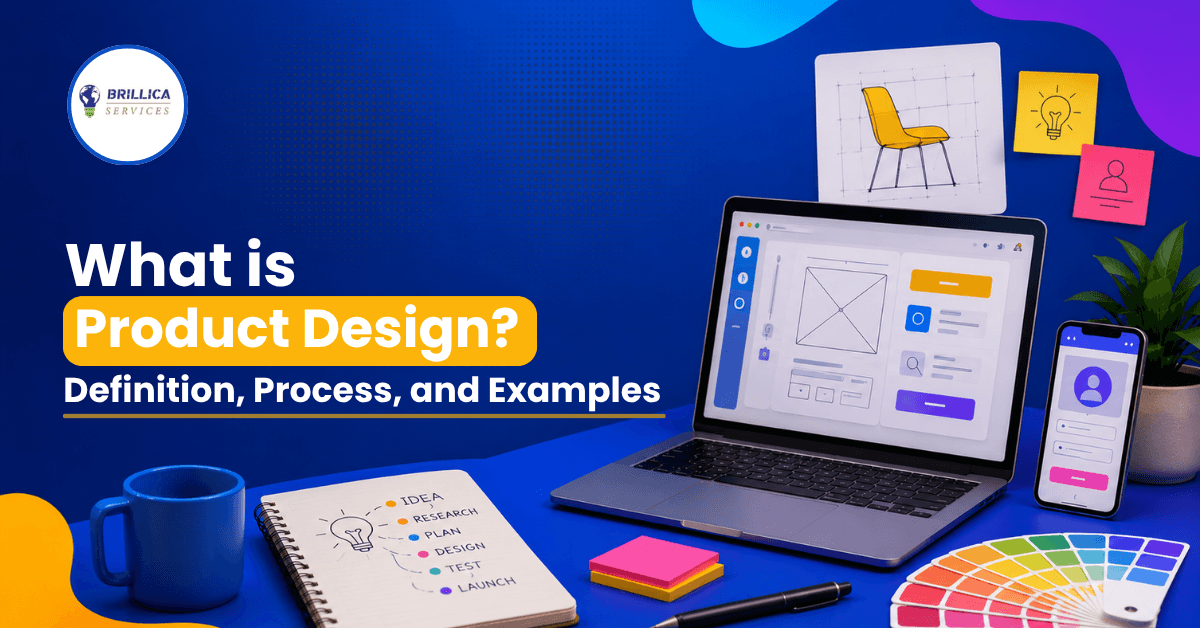
Have you ever wondered why some products are easy to use while others are confusing? Think about your favorite mobile app, water bottle, or laptop. Every successful product starts with a great idea, but turning that idea into something useful takes careful planning. That is where product design comes in.
If you are a student, beginner, or business owner, understanding what is product design can help you create better products that people actually want to use. A well-designed product is not only attractive but also solves real problems, improves the user experience, and helps businesses grow.
In this guide, you will learn the meaning of product design, the complete design process, the role of a product designer, real-world examples, and why product design has become one of the most valuable skills in today's digital world.
What Is Product Design?
To define product design, it is the process of planning, creating, testing, and improving a product so that it meets the needs of users while achieving business goals.
In simple words, product design is about finding the best solution to a problem through creativity, research, and technology. It combines user needs, business objectives, and modern design principles to build products that are functional, attractive, and easy to use.
The product can be physical, such as furniture, kitchen appliances, or clothing, or digital, such as websites, mobile apps, and software.
Today, companies invest heavily in product designing because customers expect products that are simple, useful, and enjoyable.
Why Is Product Design Important?
A good product is more than just its appearance. It helps users complete tasks quickly and comfortably while creating a positive experience.
Some major benefits of product design and development include:
Creates products that solve real customer problems
Improves customer satisfaction
Makes products easier to use
Reduces development mistakes
Saves time and production costs
Builds customer trust
Increases sales and business growth
Helps companies stay ahead of competitors
Without proper product design, even a great idea may fail because users may find the product difficult to understand or use.
What Does a Product Designer Do?
A product designer is responsible for creating products that balance user needs, technology, and business goals.
Instead of only making things look attractive, a product designer studies user behavior, identifies problems, creates solutions, and continuously improves the product based on feedback.
Their daily responsibilities may include:
User Research
Understanding customer needs through interviews, surveys, and observations.
Problem Solving
Finding practical solutions for user challenges.
Wireframing
Creating basic layouts before designing the final product.
Prototyping
Building clickable models to test ideas before development begins.
UI Design
Designing buttons, colors, typography, and layouts.
UX Design
Making the overall experience smooth and user-friendly.
Testing
Collecting user feedback and improving the design before launch.
The Product Design Process
Every successful product follows a structured process. Although companies may use slightly different methods, the overall steps remain similar.
1. Understand the Problem
Every product starts with identifying a problem that users face. Designers ask questions like:
What issue are users facing?
Why does this problem exist?
Who will use the product?
The better the understanding of the problem, the better the final solution.
2. Conduct User Research
The next step is gathering information about users.
This includes:
Customer interviews
Online surveys
Market research
Competitor analysis
User behavior studies
Research helps designers make decisions based on facts instead of assumptions.
3. Generate Ideas
Once enough research is collected, designers brainstorm different solutions.
At this stage, creativity is encouraged. Teams often sketch multiple ideas before selecting the best one.
4. Create Wireframes
Wireframes are simple layouts that show where content, buttons, images, and menus will appear.
They help everyone understand the product structure before detailed design begins.
5. Build a Prototype
A prototype is an interactive version of the product that users can test.
It helps identify usability problems before developers start coding, saving both time and money.
6. Test with Real Users
Testing is one of the most important stages of product design and development.
Real users interact with the prototype while designers observe:
Where users struggle
Which features they enjoy
What needs improvement
Feedback collected here helps improve the product.
7. Improve and Launch
Based on testing results, designers make improvements before the product is officially launched.
Even after launch, product design continues because customer feedback leads to regular updates and new features.
Types of Product Design
Different industries use different forms of product designing.
Physical Product Design
Focuses on designing real-world products like:
Furniture
Electronics
Kitchen appliances
Automobiles
Packaging
Digital Product Design
Used for digital platforms such as:
Mobile apps
Websites
SaaS products
Online learning platforms
Banking applications
Service Product Design
Focuses on improving customer experiences in services like:
Banking
Healthcare
Hotels
Travel booking
Food delivery
Product Design Examples
Looking at successful products makes it easier to understand how product design works.
Apple iPhone
One of the best product design examples is the iPhone. It combines elegant design, easy navigation, powerful hardware, and excellent user experience.
Google Maps
Google Maps helps millions of users with simple navigation, accurate directions, and an easy interface.
Spotify
Spotify provides personalized playlists, simple navigation, and clean design, making music discovery enjoyable.
Amazon Shopping App
Amazon focuses on easy product search, secure payments, personalized recommendations, and quick checkout.
Swiggy
Swiggy's clean interface, live tracking, and easy ordering process make it one of the most user-friendly food delivery apps.
These product design examples show that successful products focus on solving user problems while keeping the experience simple.
Skills Required to Become a Product Designer
If you want to become a product designer, learning both creative and technical skills is important.
Some essential skills include:
UI Design
UX Design
Wireframing
Prototyping
User Research
Problem Solving
Communication
Design Thinking
Figma
Adobe XD
Photoshop
Illustrator
Basic HTML & CSS
Team Collaboration
Continuous learning is essential because design trends and technology keep changing.
Product Design vs UI Design vs UX Design
Many beginners get confused between these terms.
Product Design | UI Design | UX Design |
Covers the complete product | Focuses on visuals | Focuses on user experience |
Includes business goals | Creates interface design | Improves usability |
Solves user problems | Designs buttons and layouts | Makes navigation simple |
Combines UI and UX | Makes products attractive | Makes products easy to use |
Product design is the broader field that includes both UI and UX design.
Tips for Better Product Designing
Whether you are designing a website, app, or physical product, these tips can improve your work:
Always design for users, not assumptions.
Keep interfaces clean and simple.
Test your designs with real people.
Listen carefully to customer feedback.
Focus on solving one problem at a time.
Keep improving your product after launch.
Learn modern design tools like Figma and Adobe XD.
Stay updated with the latest design trends.
Following these practices leads to better products and happier customers.
Career Opportunities in Product Design
As businesses continue to create digital products, the demand for skilled professionals is growing rapidly.
Popular career options include:
Product Designer
UI Designer
UX Designer
UX Researcher
Interaction Designer
Design Consultant
Product Manager
Industries hiring product designers include technology, healthcare, education, finance, e-commerce, gaming, and startups.
Conclusion
Understanding what is product design is the first step toward creating products that people love to use. From researching user needs to testing prototypes and improving the final product, every stage of product design and development plays an important role in building successful products. Whether you are a student exploring career options, a beginner learning design, or a business owner developing a new product, investing in good product designing can lead to better user experiences and long-term success.
If you want to build a successful career in UI/UX and product design, Brillica Services provides one of the best UI UX Design courses in Dehradun. The course covers industry-relevant tools, practical projects, and hands-on training to help you gain the skills needed for today's design industry. Start learning today and take the first step toward becoming a skilled product designer.
